Showing posts with label black-and-white photogrpahy. Show all posts

Monday, August 12, 2013

A World at War

U.S. Marine Gunnery Sgt. Carlos "OJ" Orjuela by Louie Palu

The Corcoran Gallery of Art in Washington, D.C. is hosting a photography exhibit that looks at 165 years of war called WAR/PHOTOGRAPHY: Images of Armed Conflict and Its Aftermath. If you're in the area, be sure to check out the comprehensive exhibit; it features more than 300 images. You can see the website for the exhibit here. The exhibit is up until September 29, 2013.

This morning, National Public Radio's Morning Edition did an excellent story on the exhibit that is worth listening to and you can do that here. They include segments of an interview with Louie Palu, a photojournalist who works in conflict zones. Both the exhibit and the story are vital reminders of the power and relevance of the still image.

Wednesday, July 10, 2013

LightZone is Now Free!


LightZone, a non-destructive photo-editing program somewhat based on Ansel Adams's Zone System, debuted in 2005 and was created by Light Crafts, Inc. It offered a more visual-based approach to image and tone manipulation and was remarkably intuitive with a relatively easy learning curve, especially when compared to Photoshop. It remains unique in that you can remove, reverse or change any step of your processing at any time in any order even in different sessions. Try doing that in any other program! And it worked in 16-bit.

I tried out LightZone shortly after it came out in 2005 and I remember liking it a lot. It took a visual approach to image manipulation, rather than a numbers- or values-based interface. And I was able to get good looking results almost immediately that were surprisingly hard to match in Photoshop. Photoshop is easier to use in cut-and-paste operations, where you area changing the image a great deal, but for just optimizing an image to look its best, LightZone was really good and fast. It was particularly good for black-and-white. It was almost like photographers designed it for other photographers to use. Imagine that!

Well, Light Crafts, Inc. went out of business in 2011 and LightZone went away, except it didn't. Fans and former employees kept the interest going and in December 2012, Light Crafts released LightZone to open source. And now a group calling itself the LightZone Project has come out with a new and free downloadable version (V4.0) for Windows and Linux, with a Mac version on its way. Actually, if you want the Windows version, hold off a bit and keep checking back since the initial release has some bugs in it that they are in the process of fixing. When they fixed things with it, they expect it to include 64-bit compatibility.

LightZone was a great program that offered features and flexibility that no other program had and now that it's free, there's no reason not to give it a try. You can download it and learn more about it here.

Monday, July 1, 2013

Remembering Brett Weston

John Sexton, one of the greatest traditional landscape photographers working today, has posted the first part of a series of videos about Brett Weston on his website. The video features John with photographers Randy Efros and Kim Weston (grandson of Edward Weston, son of Cole Weston, and nephew of Brett Weston) sitting around reminiscing about Brett. You can view the video here and while you are there, you might as well look around and take a look at John's work. He's a very fine photographer.
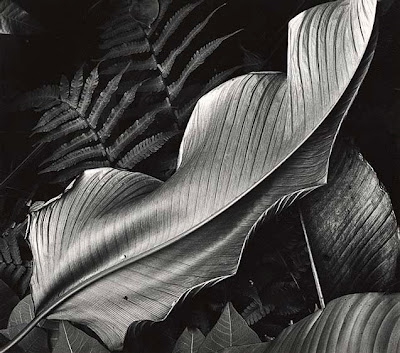
Brett Weston was a monumentally influential photographer for me. His images were pure photography in a way that not many people have ever achieved. And by that, I mean that his images only really existed to be those black-and-white images. That was their only context for him. His photographs were examples of how he saw the world and what he responded to as he existed and worked in the world. For example, a picture of a leaf was not really a picture of a leaf to him, it was an image of lights and darks, shapes and textures. It was a pure abstraction of the world, breaking it down into its parts and then arranging those parts into an image that resonated for him. Even his nudes were treated in the same way; they were about tones and shapes and composition, not about sexuality or even sensuality, thought he was personally very interested in women. Photographically to him, a mountain was no more significant or beautiful than a piece of melted plastic lying in the street. They were both raw ingredients for his visual imagination.

Brett was also a dedicated photographer who lived to photograph. He printed nearly every day of his life, early in the morning before sunrise, and after breakfast, he would go out and photograph. Photography was his life and nothing ever got in the way of that, and he continued this way nearly up until he died. His dad, Edward, was one of the seminal photographers of the 20th Century and in some respects Brett always worked in his dad's shadow. But for many late 20th Century West Coast landscape photographers, his work was probably the greater influence. His beautifully clear and coolly analytical images guided many photographers' work. And with his penchant for Porsche sport cars and dark sunglasses, he was cool, too. If you are not familiar with Brett Weston's images, take the time and look them up. He's worth it.